
NEWS
Episode 209: ‘Saving Lives in Construction’ with Sonya Bohman

By: Joseph Whiteman, CSP, CHST, Director of Safety Services, American Society of Concrete Contractors
By Sonya Bohmann for Construction Business Outlook
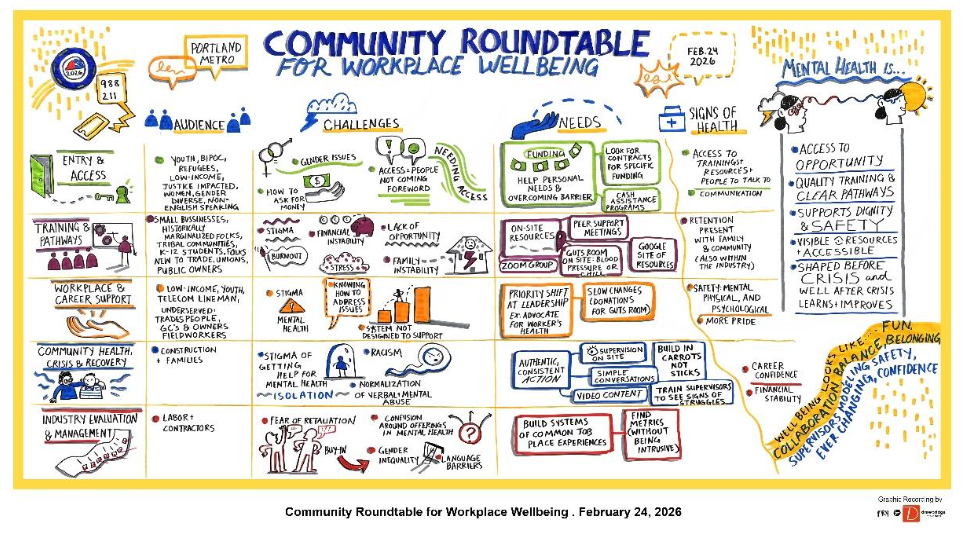
The Portland Community Roundtable on Workforce Well-Being was never intended to be a one-time event.
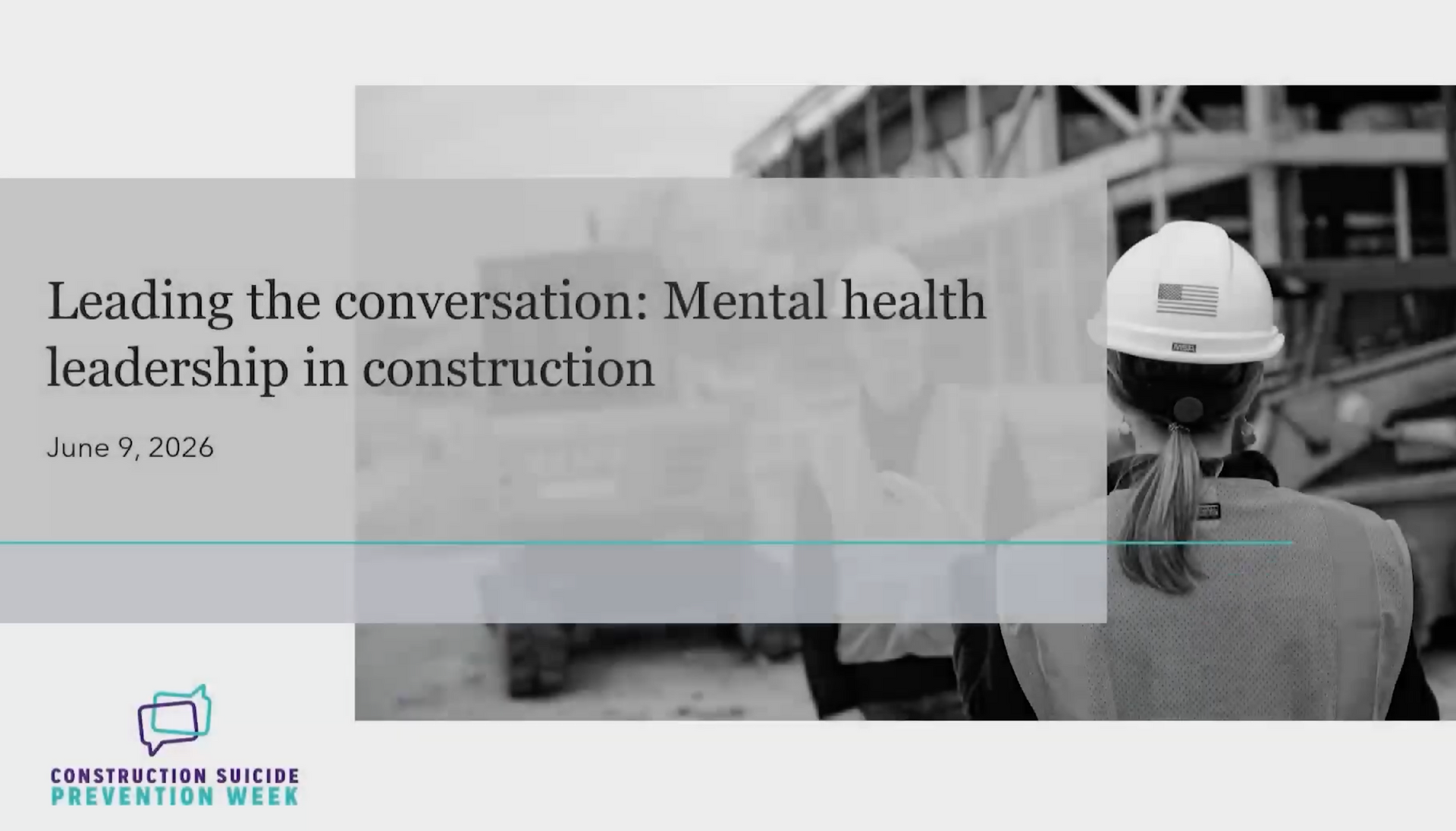
Board member, Kabri Lehrman-Schmid, on the Construction Suicide Prevention Webinar.
Lessons from Portland’s Community Roundtable by Kabri Lehrman-Schmid
NY Building Trades Employer's Association Mental Health Video
This video from the Associated Builders and Contractors (ABC) features CIASP board member Joe Xavier and other industry voices sharing candid perspectives on mental health and the importance of starting the conversation. Through personal insight and industry experience, the discussion highlights how mental health impacts workers, families, and jobsite safety, reinforcing the need for awareness, support, and a culture where people feel comfortable speaking up.
OSHA’s Workplace Stress Employer Guidance offers practical tips and tools to help employers recognize, address, and reduce workplace stress. From fostering open conversations to building supportive workplace cultures, this resource reinforces the important connection between mental health, safety, and overall worker well-being.
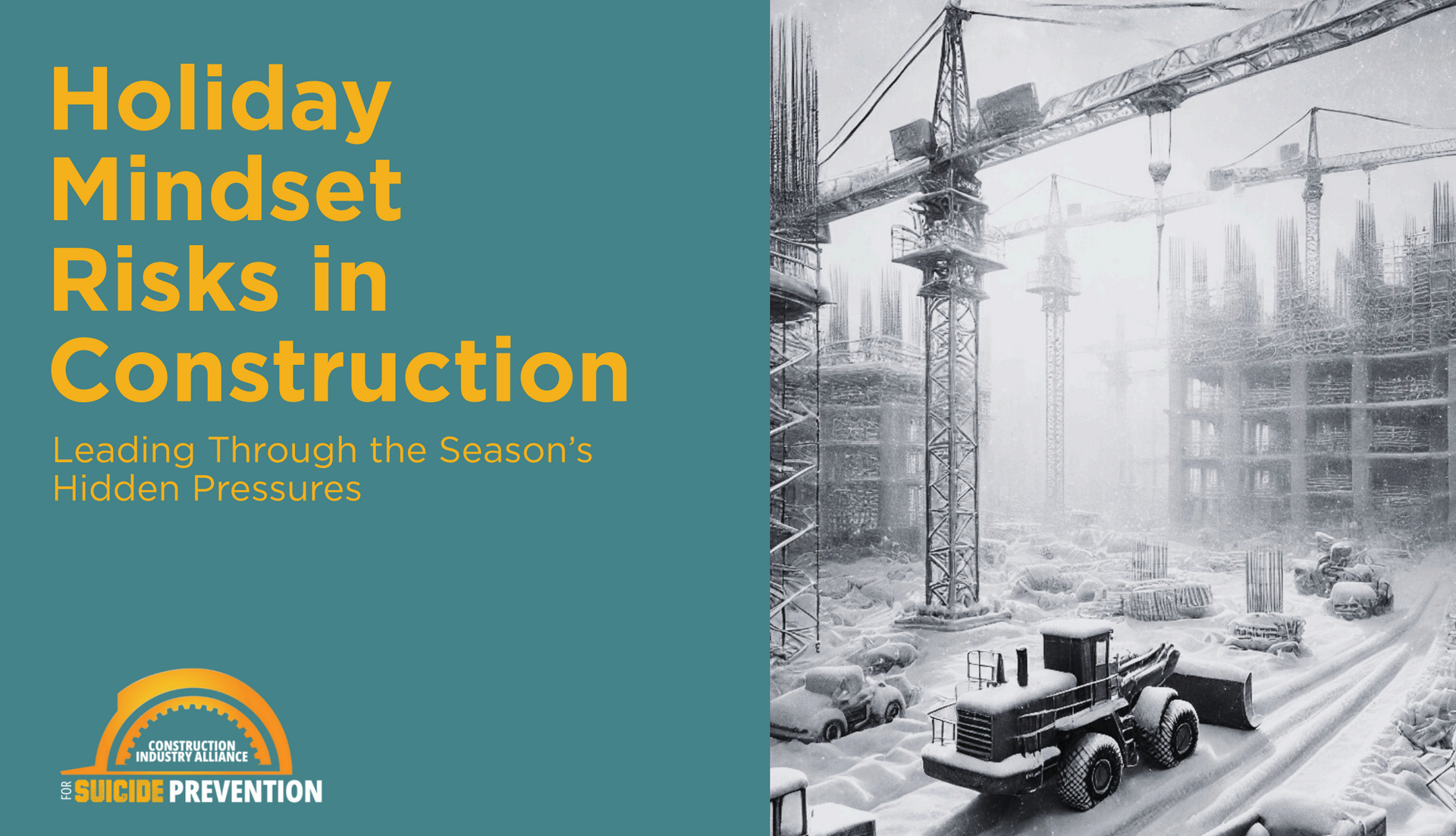
Leading Through the Season's Hidden Pressures
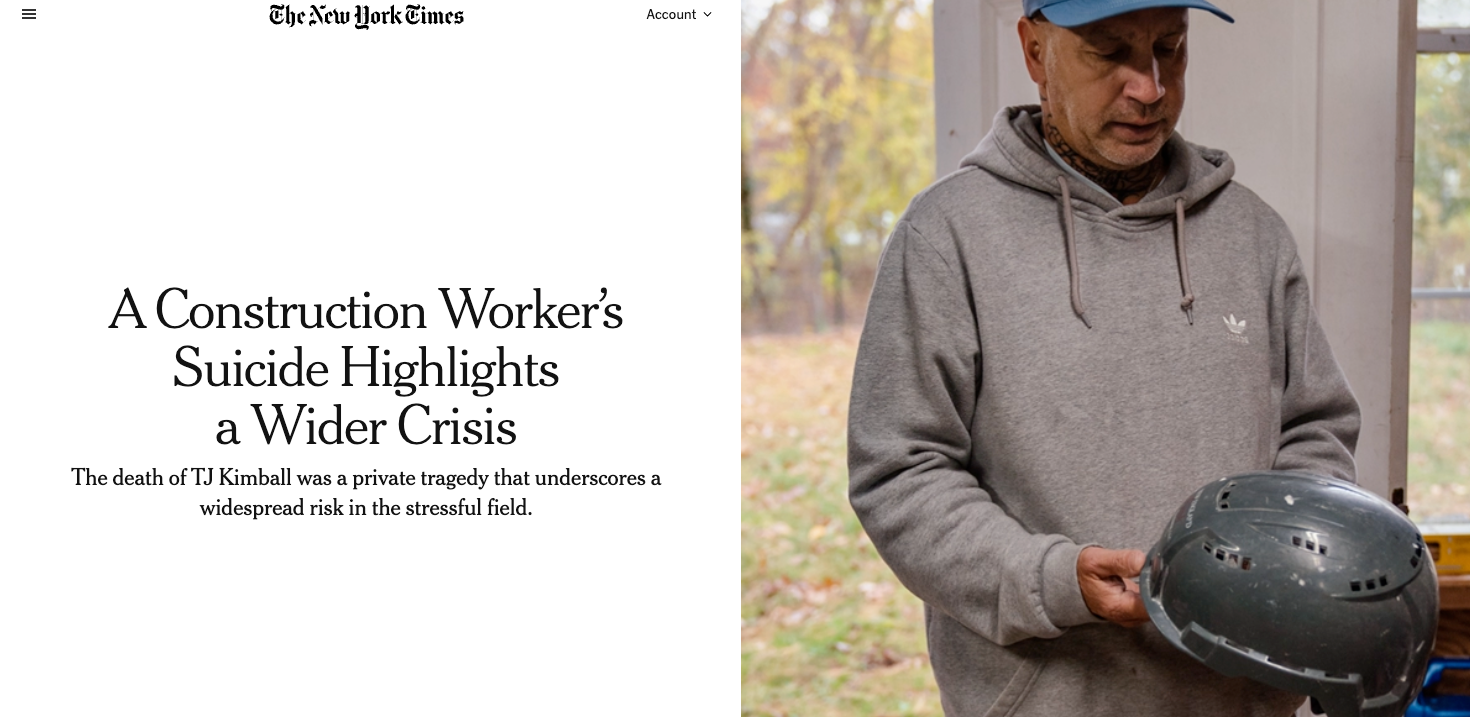
A powerful and deeply personal story from The New York Times that explores the suicide of construction worker TJ Kimball and the broader mental health and substance use crisis affecting the construction industry. Through interviews with family, coworkers, and industry leaders, this article highlights the pressures many workers face and the urgent need for continued conversation, support, and prevention efforts.
In this appearance, Sonya Bohmann continues to champion the mission of the Construction Industry Alliance for Suicide Prevention (CIASP), bringing attention to the real mental health challenges facing construction workers and the responsibility the industry has to respond. Through thoughtful conversation and practical insight, she highlights the importance of reducing stigma, creating cultures of care, and recognizing that mental health is just as critical to jobsite safety as physical safety. Sonya emphasizes that meaningful change happens when leaders, coworkers, and organizations are willing to start the conversation and support one another with compassion and action. Her message reinforces that suicide prevention is not the responsibility of one person or one company alone, but a shared commitment across the industry. To hear the full conversation and learn more about the work being done to create safer, healthier construction workplaces, watch the full episode below.
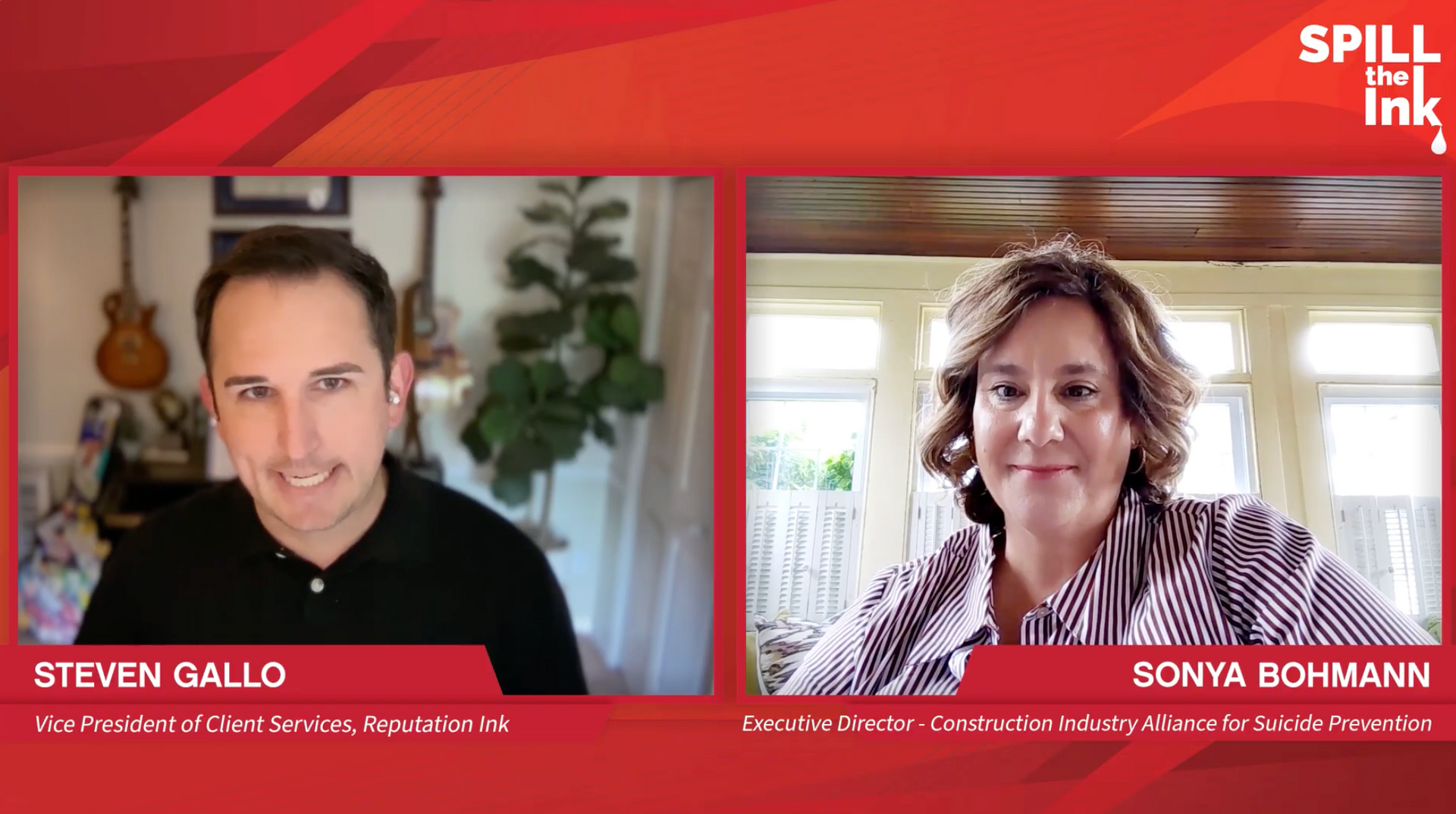
Executive Director Sonya Bohmann Joins Spill the Ink Podcast for a Special Episode

How Policy Can Protect Lives on the Jobsite
What is 988 A free confidential lifeline- providing judgement free care. Basic Stats: As of July 2025 Total Contracts to 988: 17, 785,050 Average time to answer: 33 seconds Averal Call length: 13 minutes 47 seconds How does it work: Explain difference between geo routing and geolocation: Geo routing: 988 does attempt to route callers to the nearest center to them in the network using their area code. Geolocation- which is receiving a pinpoint location for dispatch during an emergency is not in use for 988 and not being considered to ensure the anonymity of the lifeline. What to do: Call- call the number 24/7 - reach a live counselor Text- text 24/7 - you will complete a brief survey to get to the best help available Chat- available 24/7- similar to the text interaction What you can expect: Calling: Step 1- You will hear a recording that allows you to select language and or veterans option Step 2- hold music while being connect to a live counselor Step 3- You will get introduced to counselor and be asked if you are safe Step 4- Once you confirm you are safe, your counselor will listen, provide support and resources. Texting or Chatting: Step 1- You are connected to the line and chose your language Step 2 – You accept the terms of service Step 3- You will receive a brief survey to best be able to understand your level of needed support Step 4 you may be asked a few more questions Step 5 – you are connected to our counselor and asked if you are safe Step 6- your couselor listens provides support and resources Who can use it: Anyone in crisis With someone in crisis Worried about someone who may be in crisis Anyone needing extra support Worried about a substance use disorder Success Rates: 98% of all contacts are able to get a commitment to safety. However, when emergency services must be involved, over half of these emergency dispatches occur with the caller’s consent. Whenever possible the 988 counselors will recommend alternate options such as collaborating on a safety plan, utilizing mobile crisis teams, collaborating with the individual’s loved ones or professionals, or supporting the individual to get to a Crisis Stabilization Unit, emergency department, or urgent care. 988 operators must provide information to 911 operators to attempt to locate an individual, if they are unwilling to provide that information, if there is a belief that the person is in danger of seriously or fatally harming themselves or others. How is it funded? Combination between state and federal funding Sources: FAQ: Does Vibrant use police intervention for callers, texters, and chatters to the 988 Lifeline? - 988 Lifeline Lifeline Performance Metrics | SAMHSA
Lately, I have been seeing more and more conversations around Mental Health and Suicide Prevention. Which is great, unless it becomes unsafe. A few things that are important when posting, blogging, speaking, etc. Language is not neutral—it can heal or harm, especially when discussing trauma. I commend those who are willing to speak out either with their lived experience stories, or the stories of their loved ones’ struggle and/or suicide. When we have a story to share, especially one that is raw and painful, it is hard to balance wanting to unburden ourselves with protecting others' emotional space. There is power in our collective voice and in those stories. But that power must be harnessed and used with caution. Sharing lived experiences can be transformative, but only when done with intention, care, and compassion. The idea that we can tell stories of pain and resilience without graphic detail is powerful. It invites empathy without risking re-traumatization. Safe messaging is a critical component in communicating about suicide and suicide prevention. Avoiding specifics like method or location isn’t about censorship—it’s about compassion. Framing stories around hope, recovery, and connection can create space for others to feel seen and supported. Visit CIASP Safe Messaging Guidelines for more tips and advice “For Good” That quote from Wicked—“Because I knew you, I have been changed for good”—is a beautiful reminder that our voices can be a force for healing. Using our voices “For Good” means being mindful of impact, not just intent.
In 2025 CIASP embarked on a word of the year challenge. As an organization our word of the year became: Wellness You might be asking yourself- why would an organization choose a word of the year and ask their team to do the same? Choosing a word of the year is not a new practice and certainly not one that we invented. It is often used to help center and guide an organization or person. Choosing a word of the year can be useful in helping define what you want, and your WHY. The practice of choosing a word of the year is an exercise in mindfulness. There is reflection and focus that goes into choosing that one single word. This is different than a resolution, where you are focused on a task. The word of the year is a concept and ethos. Some things that might come out of the process for you are, focus and clarity - It can give you a guiding principle and help clarify what really matters to you. Align with or help determine your core values. It also allows for growth, flexibility, and adaptability. Resolutions can be rigid and limiting. A word of the year allows you to grow and develop while having a guiding ethos. 365 days is a long time; a single word of the year allows for adapting and changing circumstances. It provides a flexible framework upon which to set intentions yet shift if necessary. Some words that resonated with us were: Calm, Gratitude, Intentionality, Grace, Rise, Acceptance, Efficiency, Anticipation, Balance, Discover, Appreciation, Relational What will you choose?