
How Policy Can Protect Lives on the Jobsite

As many of us have seen firsthand, the causes of suicide are many and complex. Research is showing that some characteristics present in the construction industry – like the fast pace, low margin for error, and high injury rates – can negatively impact workers’ mental wellbeing. There is a lot more, however, we need to learn about these potential root causes of mental health struggles and/or substance use, including how they can be balanced by protective factors in the workplace.
Several years ago, CPWR and NABTU put forward a Research and Action Agenda on construction worker mental health focused on addressing upstream, work-related root causes. The agenda also emphasized strengthening support systems and ensuring workers have access to key treatment and recovery resources. As part of this agenda, CPWR funded research to advance knowledge and action on suicide prevention and opioid overdoses.
One of the projects in this work was based at the University of Iowa and explored the impact of employment laws on construction worker suicide. Principal Investigator Dr. Jonathan Davis analyzed publicly available data on suicide rates and state “paid-leave” policies to understand how employment laws and community-level factors influence suicide rates among construction workers.
Using the National Violent Death Reporting system linked to external datasets, Dr. Davis and his team identified people of working age (16 to 64) who had died from suicide between 2013 to 2020. The study found that during this period, there were 127,872 suicide deaths, with 19,511 (15.26%) being individuals who worked in construction.
When employment laws were factored in, the study found that the presence of family and paid leave laws correlated to lower rates of suicide for construction workers. This was statistically significant for female construction workers, and was true for male construction workers, but the reduction was not statistically significant. Additionally, laws that restricted opioid prescribing resulted in statistically significant lower rates of suicide for male construction workers.
Dr. Davis and his team concluded that state-level polices pose a significant opportunity to reduce suicide risk for construction workers. They are now further developing this research and hope to investigate the role of construction work in mental health disparities.
Read the full report: https://www.cpwr.com/wp-content/uploads/SS2025-Employment_Law_Worker_Suicide.pdf
Key Findings from the Study:
- Female construction workers had a lower rate of suicide when family and paid leave laws were in place. This was also true for male construction workers; however, the reduction was not statistically significant.
- Male construction workers had lower rates of suicide when laws restricting opioid prescribing practice were present. Construction workers were more likely to have substance use contribute to their suicide compared to workers in other occupations.
- Community-level factors may influence construction worker suicide. Construction workers who died by suicide disproportionately lived in areas with lower incomes and lacked access to recreation. Construction workers who died by suicide were also more likely to live in areas with high violent crime rates.





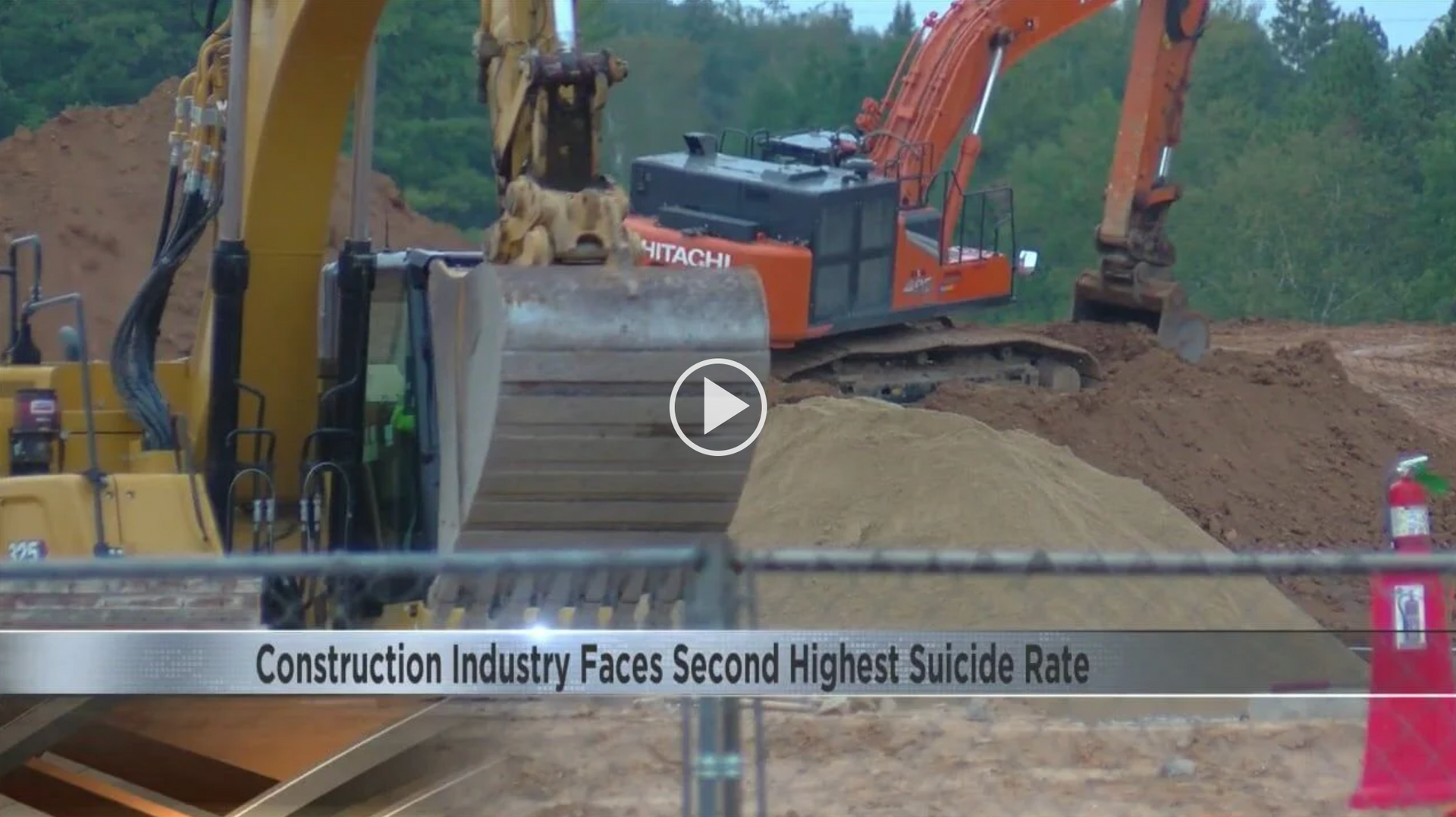
Construction industry faces one of the highest suicide rates, leaders say conversations change lives